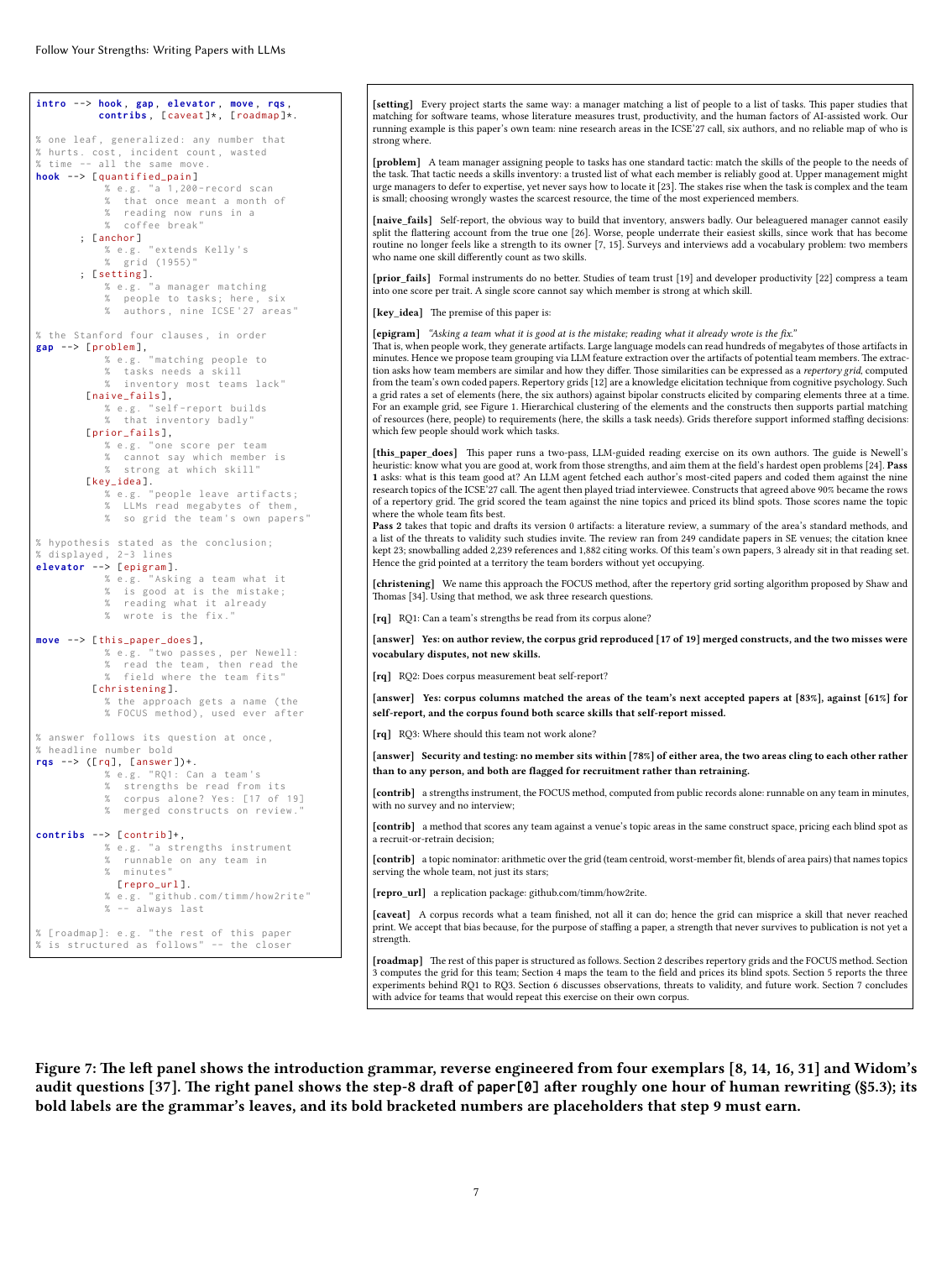
 the introduction
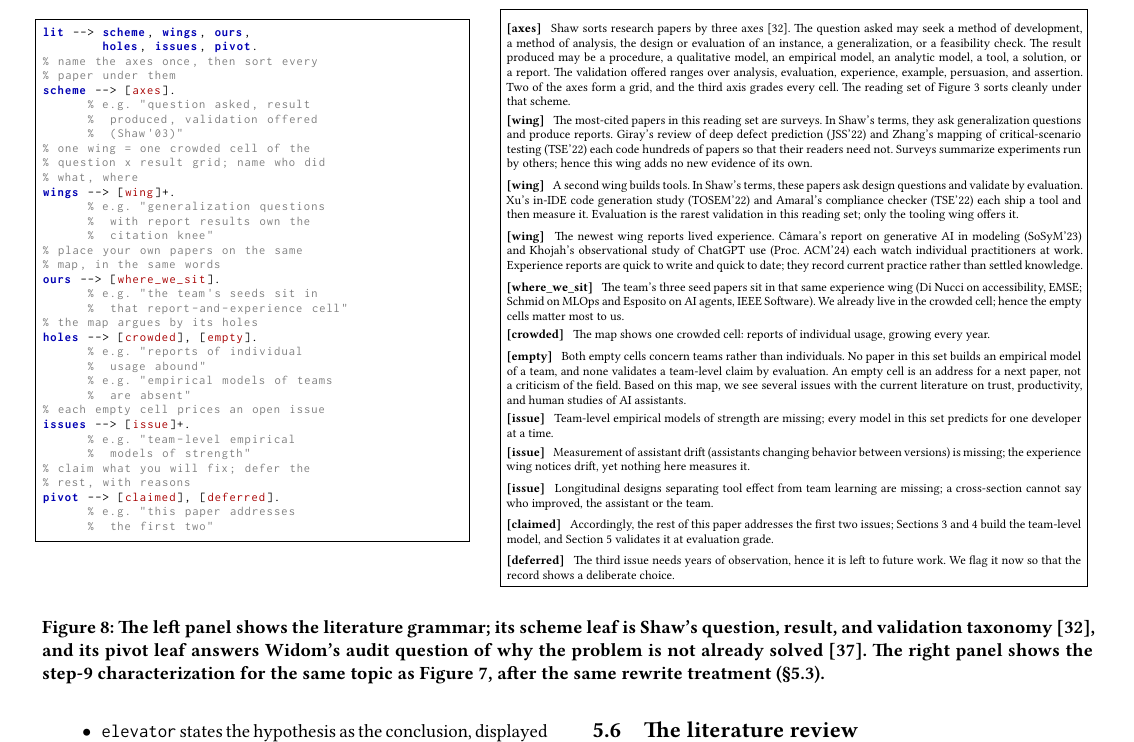 the literature review
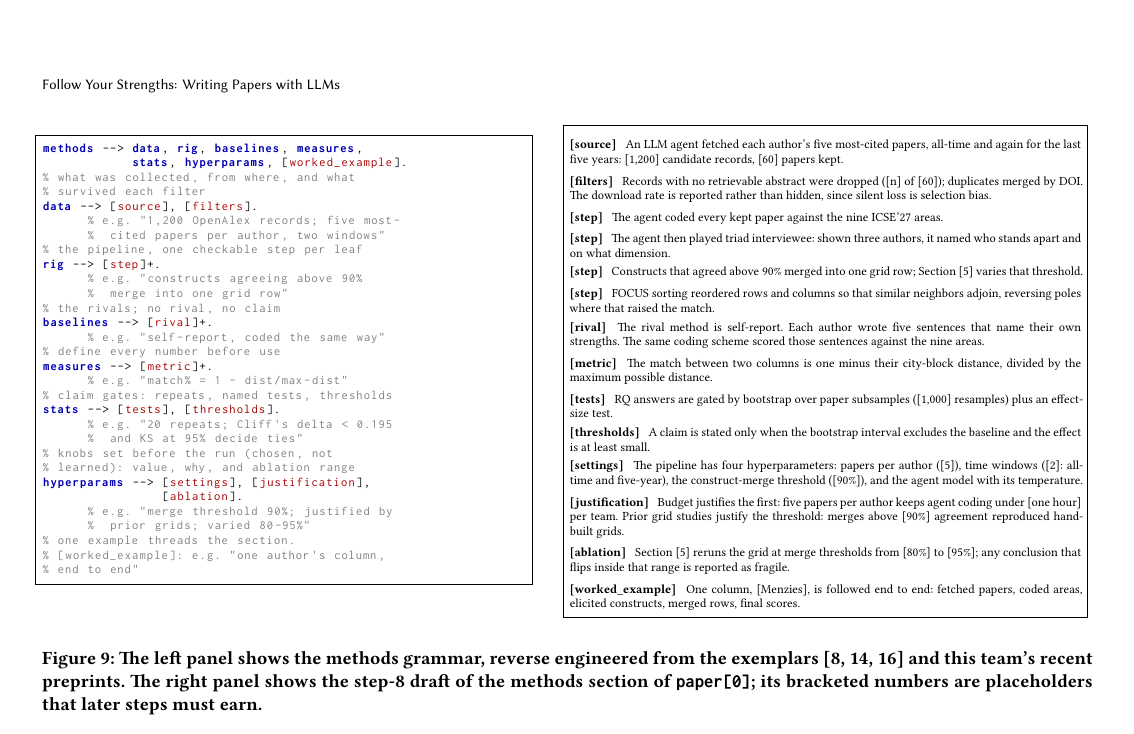 the methods
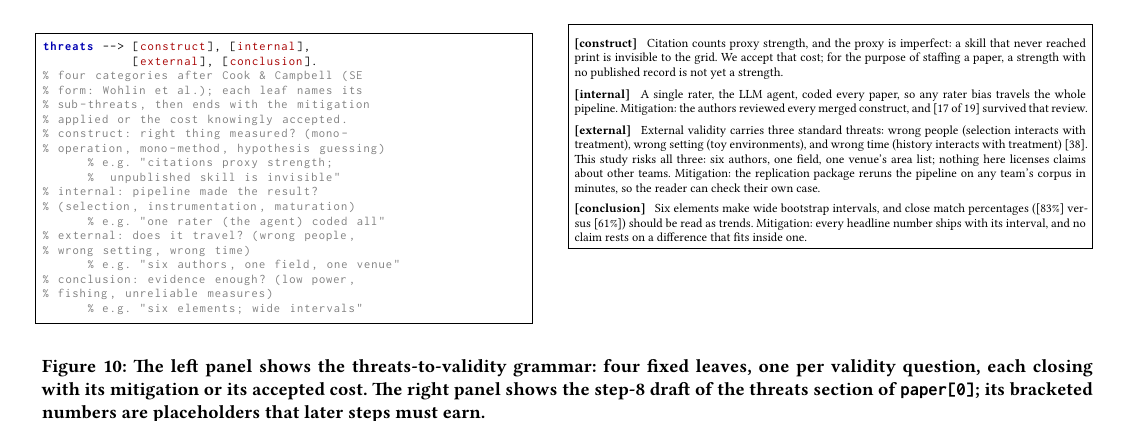 threats to validity
Every writer starts from a tested structure, not a blank page.
The move. A research paper parses under a small grammar, written in logic-programming notation: nonterminals rewrite to ordered sequences; each bracketed leaf is one prose move, a sentence to a short paragraph long.
paper --> intro, litreview, methods,
          results, discussion, conclusion.

results --> [result]+.
result  --> [rq], [charts], [comments].

intro --> hook, gap, elevator, move,
          rqs, contribs, [caveat]*, [roadmap]*.
gap   --> [problem], [naive_fails],
          [prior_fails], [key_idea].
Per-section rules, each with a worked sample:
See them run. The paper pairs each grammar (left panel) with a generated-then-rewritten sample (right panel). Click to enlarge:
Why grammars beat templates. To disagree with a structure, edit its productions and ask an LLM to regenerate the worked sample; the experiment costs minutes. Your venue opens with related work, bans roadmaps, demands structured abstracts? Adjust the grammar, not your patience. When a grammar changes, regenerate its sample in the same commit so figure and prose never drift.
Call to action. Communities curate datasets and baselines; they could curate paper shapes the same way — a catalog of grammars for the empirical study, the systematic review, the tool paper, the vision paper.
Combines with: 5 — un-slop the prose polishes what the grammar drafts; 6 — assemble critics attacks the result; 8 — keep the receipts is the conclusion rule enforced.